If you aren’t well-versed in Spanish slang from around the world, you might take the title of The Animeros’ debut album the wrong way. ¡Qué Bárbaro! literally translates to “How barbaric!” but it’s far from a pearl-clutching gasp at something violent. Rather, it’s a nod and a smirk of approval, a “That’s sick” or a “That’s badass.” The Animeros remembered friends or family saying it in a tone of brotherly awe, and the phrase came back to them as their sound cohered and materialized in these songs–songs that are celebratory, raucous, cathartic, and, well, badass.
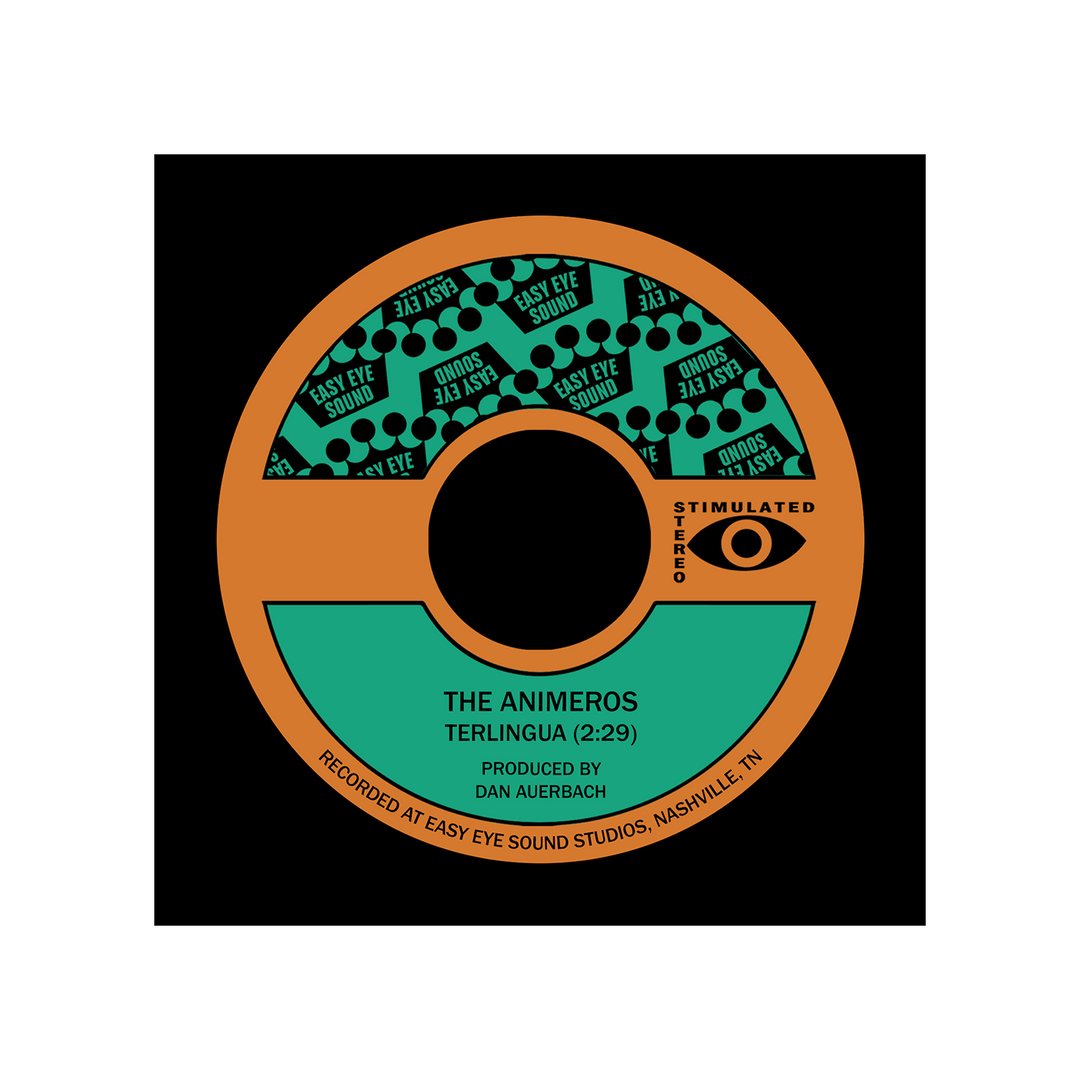
By the time guitarist Mauro Lopez, bassist Nicolas Sánchez, and drummer/percussionist Nick Tozzo joined forces as The Animeros, each had over a decade of experience cutting their teeth in Austin’s diverse Latin music scene. All had played across the spectrum, but shared a deep affinity for cumbia. “When we first talked, one of the things that initially drew us together was our love for the nuance in Latin music,” Lopez says. “That’s like a language among musicians.” Soon after forming, the trio caught the ear of The Black Keys’ Dan Auerbach, who heard their music drifting down from a rooftop during a SXSW gig. It was only their second performance, and it took Auerbach a while to track them down. But one thing quickly led to another, and Auerbach signed The Animeros to his label Easy Eye Sound after inviting them up to Nashville to produce ¡Qué Bárbaro!.
Part of what Auerbach heard was three men who had lived and breathed this music for much of their lives. Lopez mined his parents’ Tejano and jazz records, Tozzo grew up on jazz and rock before falling in love with salsa in college and eventually moving to Colombia for a stint studying folkloric cumbia, while Sánchez remembers his mom blasting cumbia around the house while cooking and learning about more obscure forms of the genre from his cousins during visits to Colombia. Each of them had played in other bands around Austin, but for their own collaboration wanted to build a tighter, smaller group to achieve a visceral, muscular take on cumbia, from which they could also grow more exploratory sonically. The Animeros’ music takes many cues from the psychedelic cumbia movement, but also bears rock elements thanks to Lopez’s guitar taking centerstage over organ. Along the way, the three also incorporated boleros, mambos, and touchpoints from exotica and old movie soundtracks. Before Auerbach, The Animeros found an audience first around Austin, where young people were hungry for the same thing the bandmembers were — to take this music to as many nightclubs as possible, to play the rhythms they all grew up on but experiment with what sort of music they were placing atop it.
Early on, the band named themselves The Animeros, referencing Colombian shamans meant to guide lost souls to peace. “The way we think about it is we usher souls to the dancefloor,” Sánchez says. “Forget about your problems, get out there and get sweaty with us.”
With an instant chemistry and a shared fluency in this music, The Animeros quickly began making their own songs. Oftentimes, one member provides a roadmap, and they begin to fill out the composition. Their interest in soundtracks taught them about storytelling through predominantly instrumental music, and many of The Animeros’ songs conjure far-flung places and time periods, crashing them all together — a packed town square in Colombia uniting generations of cumbia fans, the psych-rock and cumbia hybrids of ‘70s Peru, the Pacific coast of Mexico in the ‘60s, the dusty highways of the American Southwest. Across ¡Qué Bárbaro! a cumbia rave-up might take you to a feverish nightclub, and a vibey bolero might take you to the lonelier moments in the cantina when the clubs shut down. The trio knows the songs aren’t truly alive until they try them in the room, with part of their writing process happening onstage, as they gauge how audiences react. “I like to think the audience becomes a part of the songwriting as much as we are,” Lopez says. “We want them to feel it.”
When the trio decamped to Nashville to record at Auerbach's Easy Eye Sound studio, they brought that onstage energy with them. Though Auerbach’s most often known for his production work with roots artists like Sierra Ferrell and Yola, he’s also a fervent student of Latin music, previously working with Hermanos Gutiérrez. As The Animeros sent him demos for ¡Qué Bárbaro!, he would share ideas and suggest songs they should try their hand at–songs even they didn’t know. “He’d stump us on some stuff,” Sánchez says. “His knowledge of Latin music and cumbia goes very deep.”
When the band arrived, they found a studio stocked to achieve the sound they’d been chasing. “They had rented a mountain of percussion for me,” Tozzo says. “I got to pick all my instruments like I was putting together a racecar.” In addition to Tozzo’s hybrid set of drumkit and timbales, he also recorded all the hand percussion on the album, including congas, bongos, guacharaca, and the güiro. Meanwhile, Lopez and Sánchez raided Easy Eye’s vast store of vintage guitars. They cut everything live in the room, giving ¡Qué Bárbaro! a sense of raw immediacy, but also precision. Though the music was already accessible, Auerbach’s ear for pop songcraft guided arrangements and encouraged The Animeros to add choruses to their originals. Meanwhile, he also spent time on his hands and knees dialing in tones on the guitars and amps.
“He got down and dirty with us,” Sánchez smiles.
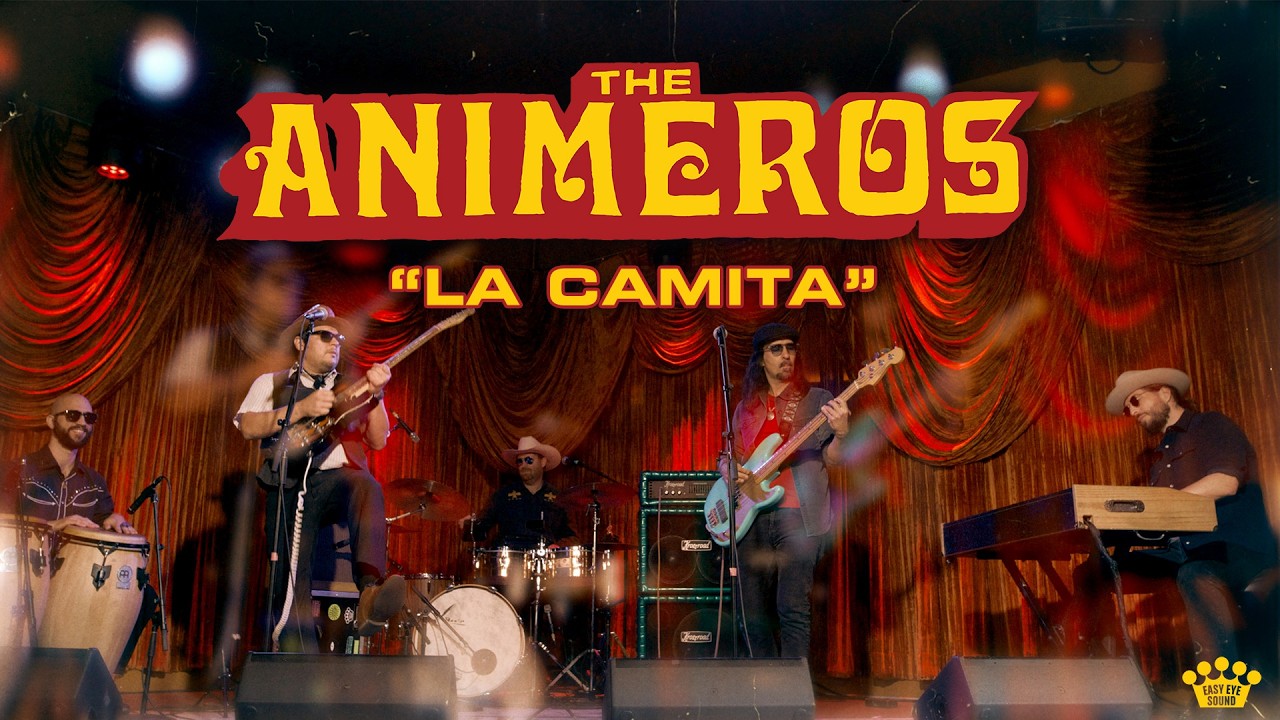
The songs they recorded are bursting with color, often written with a visual quality–the band just as often thinking about a Quentin Tarantino fight sequence, a Spaghetti Western showdown, or a long ambling journey across the deserts of America as they are the scenes from which these sounds traditionally emerge. The imagined soundtrack in their head was a vivid collision of Latin music. Pre-release single “Mamba Mambo” was their love letter to the golden-age mambo explosion, filtered through fuzz pedals and Tex-Mex psychedelic soul. “Danza De Los Saguaros” distilled the twin influences of cumbia and the American Southwest, while “Ponchote de Ritmo” was inspired by South American cumbia psicodélica and chicha sounds of the ‘60s and ‘70s. The psychedelic cumbia mood continues in “La Camita,” the trio’s take on Traffic Sound’s 1971 cut, which they likened to “Latin garage rock.” Other reimaginings on the album include “Descarga Royal,” a feel-good dancefloor jam The Animeros have already begun using as their set opener, and “Gózalo,” which pays homage to the South Texas Latin soul legend Esteban Jordan while the band puts their own tropical-tinged, humid touch on the song.
The songs gather to make ¡Qué Bárbaro! a kaleidoscopic fusion of now and then, honoring the rich cultural heritage the band is carrying but also guiding these rhythms on new adventures. These are sounds that have defined Latin music for decades, yet remain current and vibrant today. For The Animeros, it’s about using the music in their DNA and thinking about what new things they can say about it, what new ways they can make people move. That, in the end, is how they know the music is working. “That’s our metric,” Tozzo concludes. “If they’re dancing, we know we got them.”